How do I get a random meme from an API?
The simplest way is to call a random endpoint that returns one meme per request, like the Reddit-based Meme_Api or Imgflip's meme list, then read the image URL from the JSON response. If you want searchable, curated memes instead of a random dump, memecub offers a REST API (search costs 1 credit per call), a remote MCP server at https://memecub.com/mcp, a CLI via npx memecub, and a skill you can install with npx skills add https://memecub.com. A keyless trial gives you 20 searches a day, so you can test before picking a plan.
Send when your random endpoint returns something completely unrelated and you just roll with it.
The reaction when the API returns a meme about your own code instead of the one you wanted.
For the moment a surprise random meme lands in the team chat mid-debug.
When the random response is so odd it genuinely startles you.
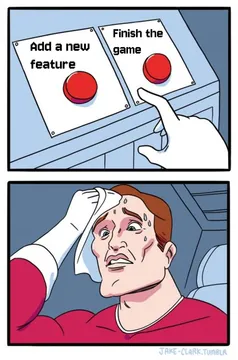
The two-button dilemma of adding one more feature to your meme bot.
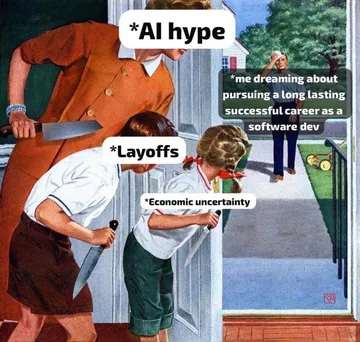
For the developer hiding from the random meme their own script posted.
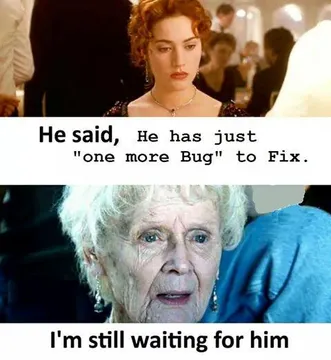
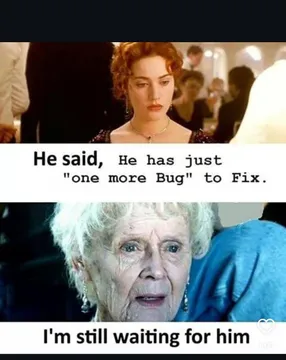
When you promise the random meme will be fixed in the next release.
How a random meme API works
A random meme API is just an HTTP endpoint that returns one meme per call, usually as JSON with an image URL, a title and sometimes a page link. You send a GET request, parse the JSON, and display or download the image.
Two common styles exist. Random endpoints (like D3vd/Meme_Api, which pulls from subreddits such as memes, dankmemes and me_irl) return whatever comes next. Search endpoints (like memecub's REST API) let you ask for memes by keyword, which is more predictable for apps and agents.
A minimal fetch example
With memecub's REST API, a search call costs 1 credit and returns matching memes you can pick from. The keyless trial allows 20 searches a day, so you can wire it up before choosing a plan.
bash
# CLI: search from the terminal
npx memecub search "deploy on friday"

# MCP server for AI agents
# endpoint: https://memecub.com/mcp
For AI coding tools, install the skill with npx skills add https://memecub.com into Claude Code, Codex, Cursor or similar, and the agent can search memes for you. If nothing in the library fits, the AI meme maker at /generate creates one from a character, action and caption in about 10 seconds.
Choosing between random and search
Random endpoints are great for demos, chat bots and anything where surprise is the point. They are less useful when you need a meme that matches a topic, since you cannot control what comes back.
Search-based APIs fit product features, article illustration and AI agents that need a relevant image. memecub's AI meme placement (/match) goes further: paste an article and it picks a fitting meme for each paragraph.
Check licensing before shipping. Most memes collected from the web are fine for personal chats, but copyright stays with the original creators and they are not for commercial use. memecub has a filter that shows only openly licensed images (Openverse, open-source emoji, public-domain art) that can be used commercially.
Plans and limits at a glance
memecub's free plan includes 1000 credits a month. Hobby is $3/mo for 10000 credits, Pro is $9/mo for 50000, and Scale is $29/mo for 250000. Credit packs start at $5 if you only need a top-up.
Let your AI find the memes
REST API, remote MCP, CLI and a skill. Try 20 searches a day without a key.
More that fit



FAQ
Is there a free random meme API?
Yes. D3vd/Meme_Api and Imgflip's meme list are commonly used free options, and memecub offers a keyless trial of 20 searches a day plus a free plan with 1000 credits a month.
How do I fetch a random meme in Python?
Send a GET request with requests or httpx to a random endpoint, then read the image URL from the JSON response and download or display it. For keyword-based results, call a search endpoint such as memecub's REST API instead.
What is the difference between a random meme API and a meme generator API?
A random meme API returns an existing meme, while a generator API like memegen or Imgflip creates a new image from a template and text. memecub's AI meme maker also generates images from a description.
Can I use API memes commercially?
Only if the license allows it. Web-collected memes usually stay with their original creators and are meant for personal use; memecub's openly licensed filter shows images that can be used commercially.
Can an AI agent fetch memes directly?
Yes. memecub provides a remote MCP server at https://memecub.com/mcp, a CLI via `npx memecub`, and a skill installable with `npx skills add https://memecub.com` for tools like Claude Code, Codex and Cursor.