What does the git blame meme mean?
The git blame meme is about running git blame to find who wrote a bad line of code, and the output pointing back at you. It's funny because git blame is a real command that shows the last person to touch each line, so the joke is self-exposure: the culprit, the commit, and the timestamp are all yours. The classic caption is “It was you. It was always you.”
Send it right after git blame shows your own name on the line you were about to complain about.
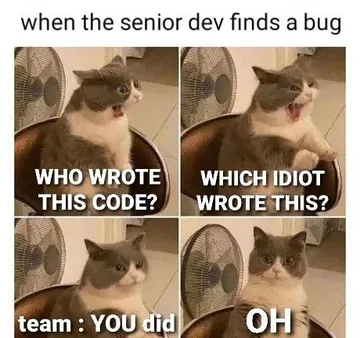
The senior dev yelling “WHO WROTE THIS CODE?” is the setup; the git blame output is the punchline.
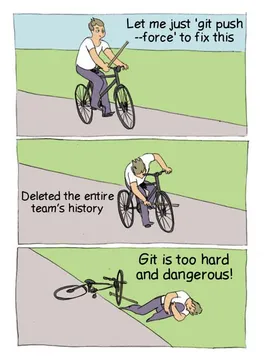
For the git push gone wrong that you will later have to blame on yourself.
Use it when git blame reveals the same two people keep breaking the same file.
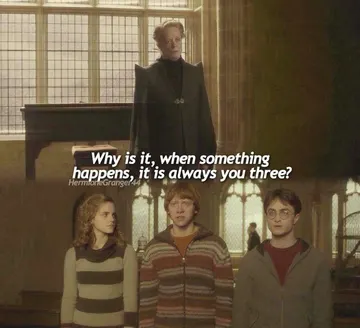
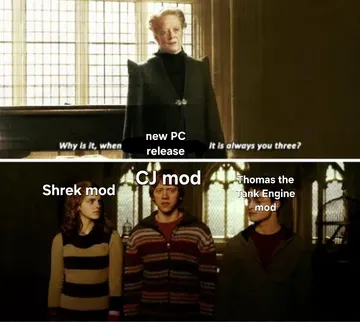
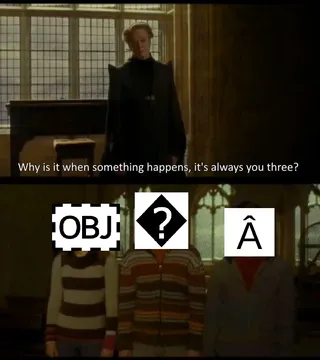
When the blame output lists the same three authors on every bad line.
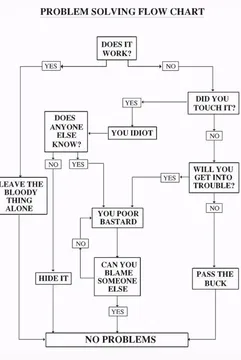
For teams whose debugging flowchart ends at “blame the AI” instead of reading the diff.
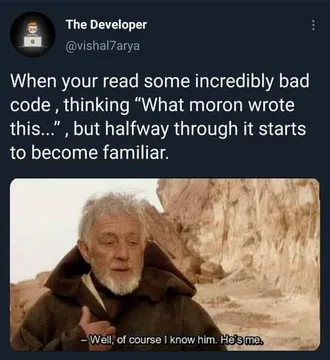
A quiet, resigned reaction for when you realize the bad commit is from three years ago and also yours.
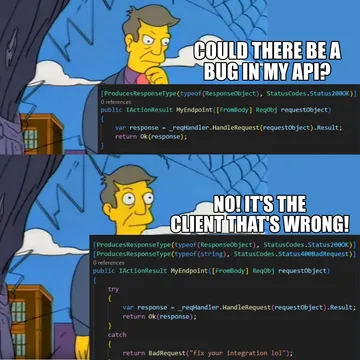
Send it when the bug turns out to be in the requirements, not the code git blame pointed at.
What git blame actually does
git blame <file> prints each line of a file next to the commit hash, author and date of the last change to that line. It is a normal part of debugging: you find a strange line, run blame, and see who touched it and in which commit.
The meme starts there. The command is called blame, so people expect it to accuse someone else. Instead the output often shows your own name, your own commit message, and a date when you were clearly tired.
Why the joke lands
The humor is the gap between the confidence of the search and the result. You open git blame ready to be righteously annoyed, and the tool quietly says: it was you.
It also works as a team joke because everyone has done it. The line you were sure came from a careless teammate turns out to be a quick fix you made at 1 a.m. The meme is a way to admit that without writing a paragraph.
How to send it without being annoying
Send it on yourself first. Posting the meme after your own bad commit reads as self-aware; posting it at a teammate reads as a callout.
If you do want to point at someone, pair the meme with the actual blame output so the joke is about the code, not the person. Keep it in the team chat, not in a code review comment where it can look like a verdict.
For a written version, the caption “It was you. It was always you.” works with almost any dramatic reveal image. If nothing in the library fits your exact situation, the AI meme maker on memecub can build one from a character, an action and a caption.
Related git memes people mix it up with
git blame memes are often confused with git push and git rebase memes. Push memes are about breaking shared branches; rebase memes are about rewriting history and the fear that follows. Blame memes are narrower: they are always about authorship and the moment of discovery.
The other common variant is blaming the AI or the client instead of a person, which is the same joke with the accusation redirected.
Nothing quite right? Make one
Pick a character, type a caption, get it in about 10 seconds.
More that fit

FAQ
What does git stand for in slang?
In slang, git is a British insult for a foolish or unpleasant person, unrelated to the version control tool. In developer memes, git almost always means the tool, and git blame means the command.
Why is git blame funny?
Because the command is named like an accusation but usually exposes the person running it. The output shows the author, commit and date of the bad line, and it is often you.
What is a good git commit message?
One short line saying what changed and why, in the imperative, like “fix null check in login”. Good commit messages also make git blame more useful, since the blame output shows the message next to your name.
Where can I find more git memes?
Search “git” on memecub to browse memes tagged around programming and version control, or use the AI meme maker if you need a specific caption.
Can I use these memes at work?
Most memes on memecub are collected from the web and are fine for personal chats, with copyright staying with the original creators. For anything commercial, use the filter that shows only openly licensed images.